Ted Williams split the strike zone into 77 cells, each the size of a baseball. Swing only at the best ones and he’d hit .400. Chase the low outside corner and he’d hit .230. Buffett kept the grid and threw out the umpire: in investing, nobody calls strikes.
The baseball lesson
Williams laid the grid out in The Science of Hitting. Buffett retold it to shareholders:
“Swinging only at balls in his ‘best’ cell, he knew, would allow him to bat .400; reaching for balls in his ‘worst’ spot, the low outside corner of the strike zone, would reduce him to .230. In other words, waiting for the fat pitch would mean a trip to the Hall of Fame; swinging indiscriminately would mean a ticket to the minors.”
— Warren Buffett, 1997 Berkshire Hathaway shareholder letter
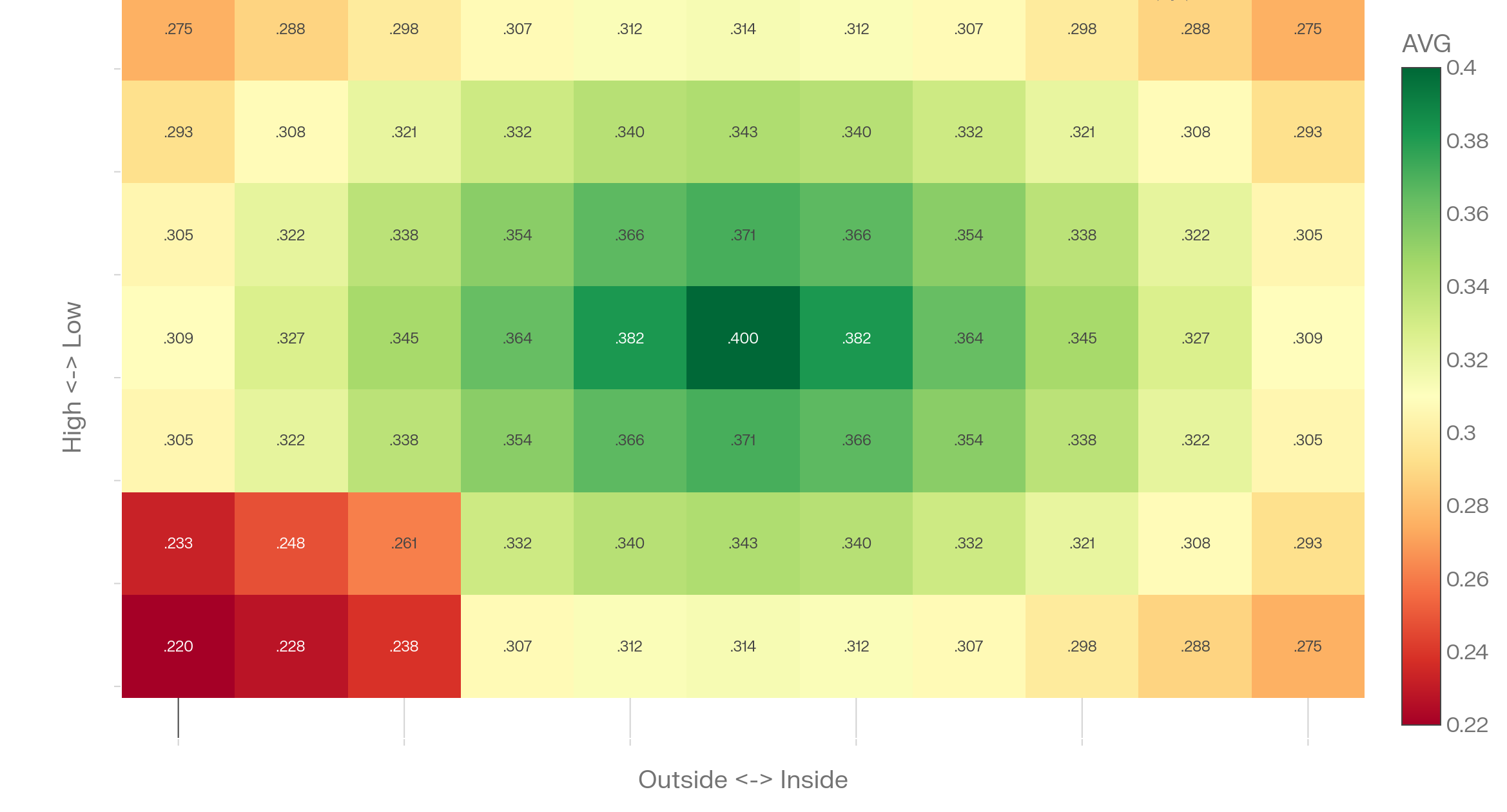
The green center is your sweet spot. The red edges are pitches you let go by.
Why investing is easier than baseball
A hitter has to swing eventually, because the umpire calls strikes. You don’t. Nobody makes you buy a stock, a company, crypto or property because it’s moving or because everyone else is talking about it.
Buffett has made the point with General Motors as the pitch: it comes right down the middle, you don’t know enough to decide, you let it go, and nobody calls a strike. The only way to strike out is to swing and miss.
So the job isn’t predicting the market. It’s keeping your hands still when you don’t have an edge.
What a fat pitch is
A stock down 30% isn’t one. Neither is a cheap number on a screen or an exciting story. A fat pitch is the rare case where all of these hold at once:
- You understand how the business makes money.
- It has durable strengths: brand, switching costs, scale, network effects or a cost advantage.
- Its economics are good: high returns on capital, sensible debt, real free cash flow.
- Management is competent and treats owners fairly.
- The price leaves a real margin of safety below a conservative estimate of intrinsic value.
- You can explain in plain words why the market may be wrong.
- You’d hold it for years, not until the next price move.
Miss one and it’s a pitch near the edge of the zone. Let it go.
Your own strike zone
Your zone isn’t Buffett’s. It’s the small set of businesses you can judge better than the average person.
A software engineer, for example, might have an edge in vertical SaaS, developer infrastructure, payment rails or broker platforms. That doesn’t make every tech stock understandable. The useful question is narrower: can I estimate the long-term economics and risks here more reliably than in a random airline, miner, bank or biotech?
A sensible rule while you’re starting: if you can’t state the business model, the competitive advantage, the major risks and a conservative valuation range, the pitch is outside your zone.
Why the discipline pays
Waiting costs nothing. Passing on an uncertain idea puts no strike against you, and Buffett’s no-called-strikes rule is permission to do nothing.
It also keeps mediocre ideas out. Munger said it takes character to sit on cash and do nothing, and that he didn’t get where he is by going after mediocre opportunities. If you only have room for three positions, he’d rather they be your best ideas than your worst.
The rest follows from doing less. A written strike zone is harder to argue with when FOMO, a hot story or a red screen push you to trade. Fewer decisions mean less turnover, fewer fees and taxes, and less market commentary in your head. And compounding needs years of retained earnings that a habit of selling to find the next idea keeps interrupting.
A checklist before you swing
- Would I be happy to own this business if I couldn’t see its stock price for five years?
- Can I explain how it makes money in three sentences?
- What makes customers stay or competitors struggle?
- What could permanently damage the business?
- Is the balance sheet strong enough for a bad year?
- What conservative value do I estimate, and is the price clearly below it?
- What evidence would prove me wrong?
If the answers are vague, let the pitch go by.
Retail investors get a different set of pitches
You can’t copy Berkshire’s rescue financing. In 2008 Buffett negotiated preferred shares and warrants with Goldman Sachs and General Electric. Ordinary shareholders couldn’t.
That cuts both ways. Buffett’s real handicap is size. Berkshire has to put enormous sums to work, so an idea has to be both attractive and big enough to move its per-share value. A $10 million, $50 million or even $200 million mispriced small-cap, spin-off, odd-lot or neglected niche is invisible to Berkshire. For you it can matter a lot. Buffett said as much in 1999, about running small sums:
“It’s a huge structural advantage not to have a lot of money.”
— Warren Buffett, Businessweek interview, 1999
Retail investors can fish in smaller ponds: illiquid but legitimate securities, small companies, forced-selling situations, obscure international names and special situations too small for institutions to study. One of those can change a small portfolio and wouldn’t register inside a trillion-dollar conglomerate.
None of this means you should sit in cash waiting for a 40% crash, or try to imitate Buffett’s private deals. The edge is flexibility. You have no mandate, no quarterly redemptions, no billions to deploy and no obligation to own only liquid mega-caps.
For someone without a circle of competence, “singles, doubles and getting on base” is still the right default: low-cost index funds, regular contributions and a sensible cash reserve. That’s a sound choice.
In baseball terms, Buffett gets some pitches you’ll never see, but he has to swing a bat so big that most of the field is closed to him. Yours is smaller, and it can still change your scorecard.
Being ready is the job, and it’s why Buffett and Munger will wait indefinitely rather than swing at something merely acceptable. The work that makes a pitch recognizable when it arrives is laid out in the seven steps before you buy. In the second half of the video, Buffett talks about the punch card: 20 decisions in a lifetime.
Every pitch in FatPitches starts with step 0: can you confidently analyze this business? Only Inside opens the rest. Answer Not sure or Outside and the app offers to move it to Too hard, the pile that should end up your biggest. Research 10 companies free, for life.